


Exacta Weather Alarm-Radar
4.3436.00 Reviews
App Specs
- Version
- 2.0.2
- Updated On
- License
- Free
- Downloads
- 500,000+
- Developer
- Sync Broad Media & Technology LLC
- Categories
- Tools
- Platform
- Android
Screenshots
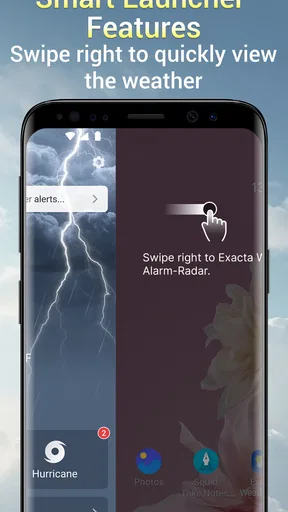
 Analysis by AppCompare
I usually give weather apps only a few days before deciding whether they deserve a permanent place on my phone. Exacta Weather Alarm-Radar made a good first impression because it focuses on the thing most people actually want from a weather tool: a clear answer about what conditions are likely to feel like when they leave home. After using it as a practical daily utility rather than a novelty, I found that its value depends less on constant browsing and more on whether its forecasts fit naturally into your routine.
Exacta Weather Alarm-Radar is a free weather app from Sync Broad Media & Technology LLC, listed in the Tools category for Everyone. It has reached over 500 thousand installs and holds a 4.3 average from around 2.8 thousand ratings, with 432 written reviews. Those figures suggest that it has attracted a meaningful audience without making it feel like an overbuilt weather platform.
What the first week feels like
The first week is when this app is easiest to appreciate. Weather information is most useful when it helps me make a small decision: whether to carry an umbrella, leave earlier, change a walk, protect something outdoors, or dress for a colder evening than the morning suggests. The app’s identity, reflected in the name Alarm-Radar, points toward timely awareness rather than a purely decorative forecast screen.
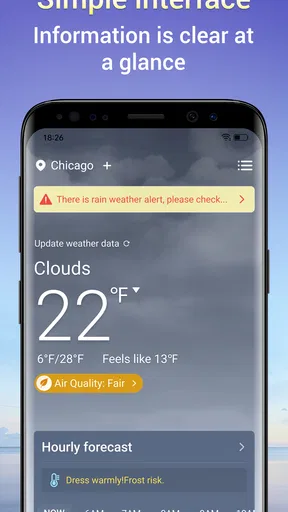
That distinction matters. Many weather apps try to become dashboards filled with maps, articles, lifestyle cards, pollen panels, videos, and promotional material. Exacta Weather feels more appealing when I treat it as a focused tool. I open it to check conditions, make a decision, and close it. For someone who wants a weather service without turning every forecast into a browsing session, that focused approach can be refreshing.
My most useful everyday scenario would be a workday with an uncertain commute. I check the weather before leaving, then check again before heading home if the sky has changed. The practical benefit is not that the app eliminates uncertainty; weather forecasts can never do that completely. The benefit is that it gives me a reason to verify conditions instead of relying on a glance through the window or yesterday’s assumption.
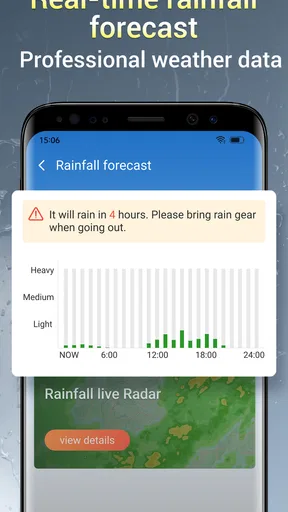
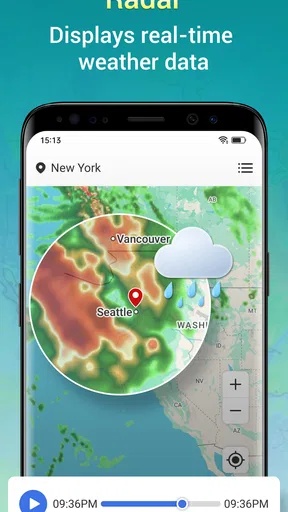
The radar angle is particularly helpful for short-term decisions. A general daily forecast might say that rain is possible, but a radar view can help me judge whether a nearby shower is worth waiting out or whether it is sensible to change plans. I would not use that as a guarantee of exactly what will happen at my address. I would use it as a visual aid for timing, which is a more realistic and useful expectation.
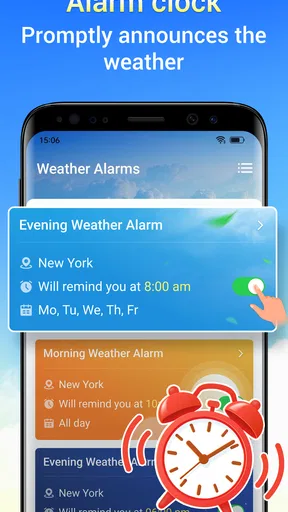
The alarm idea also changes how I think about the app. A weather app that I must remember to open has one kind of value; a weather app that helps me remember a relevant condition has another. I would still avoid treating any alert as an instruction to ignore the sky, local warnings, or official emergency guidance. For ordinary planning, though, a timely reminder can prevent the familiar mistake of discovering bad weather only after stepping outside.
Worth Reading Before You Choose

EA SPORTS FC Mobile 26 Is a Bigger Football Game, but It Takes Time

Flipboard Shows What News Apps Must Do Beyond the Feed

Switching to Android Auto Means Rethinking Your Driving Routine

Google Calendar Makes a Crowded Week Easier to Manage

Ludo King Makes the Most of the Minutes Between Plans

Baby Panda World Brings Quick Play to Modern Phones, but Its Game Library Feels Busy
One tip I found useful is to check weather at the moments when a decision is about to be made, not repeatedly throughout the day. Constant checking can create the illusion of control while adding little information. A morning check for the first part of the day and a later check for the return journey make more sense than opening the app every hour.
Where it fits among familiar alternatives
Compared with a basic built-in phone weather panel, Exacta Weather Alarm-Radar offers a more deliberate destination for checking conditions. The built-in option is convenient because it is already visible, but it can be too easy to skim and forget. This app makes more sense for someone who wants weather to be an intentional tool rather than a small widget glanced at in passing.
Compared with large weather platforms, the trade-off is different. A major service may offer a broader collection of maps, long-range views, news, warnings, and specialized environmental information. That can be useful for travel, outdoor work, or serious planning, but it can also make a simple forecast feel busy. Exacta Weather is more attractive if your priority is a straightforward weather habit rather than a complete meteorological workspace.
I would also separate it from dedicated emergency alert tools. A general weather app can support everyday awareness, but it should not replace official local channels during severe conditions. That is not a criticism unique to this app; it is a sensible boundary for any consumer weather service. The best use is ordinary planning, with official alerts taking priority when safety is involved.
Whether it earns space after the novelty fades
The first-week appeal is easy to understand, but the more important question is what happens after the initial curiosity disappears. Weather apps often become background utilities: installed, opened occasionally, and forgotten until a storm or unusual temperature makes them relevant again. Exacta Weather has a chance to remain useful because weather decisions repeat every day, but only if its checks are quick enough to become part of a routine.
I would build that routine around three moments. First, I would check before leaving home when clothing or transport might be affected. Second, I would check before a fixed outdoor appointment. Third, I would check when returning home later than usual. This keeps the app connected to real decisions rather than turning it into a source of endless forecast consumption.
That habit also reveals an important strength: the app does not need to be interesting every day to be worthwhile. A good tool can be quiet. If it helps me avoid one poorly timed trip, one unnecessary umbrella decision, or one uncomfortable commute, it has done its job without demanding much attention.
The month-to-month value is strongest for people whose schedules repeatedly interact with outdoor conditions. Walkers, commuters, parents arranging school runs, cyclists, dog owners, gardeners, and anyone who works between indoor and outdoor locations can all find a recurring reason to check it. The value is weaker for someone who spends nearly every day indoors and already receives all necessary information from a device’s default weather display.
One less obvious use is planning around transitions rather than destinations. The weather at the beginning of an outing may not be the weather that matters most. A mild morning followed by a wet evening, or calm conditions before a later change, can affect what I carry and when I travel. Checking the forecast as a sequence helps me make better choices than focusing only on the current temperature.
Another useful habit is to compare the app’s forecast with what I actually experience, without turning that into a scientific test. If the information repeatedly proves helpful for my area and schedule, I am more likely to keep using it. If I notice that a particular kind of local condition is consistently different from what I expect, I become more cautious and use the app as one input rather than the final word.
The maintenance burden is low, but not invisible
A weather app should not become a second job. The maintenance burden here is mainly behavioral: keeping the app available, remembering to look at it when a decision matters, and resisting the temptation to treat every forecast change as a reason to reorganize the day. That is manageable, but it still determines whether the app becomes useful or merely occupies storage.
The current version is 2.0.2, and it requires Android 8.0 or later. For a person using a compatible phone, that makes the practical decision fairly simple: install it, try it during a normal week, and judge whether the checks are faster or more useful than the weather tool already in use. The free price removes the financial barrier, so the real cost is attention rather than money.
I would not maintain a weather app by checking every setting daily. Instead, I would establish a small routine and then leave it alone unless the experience becomes inconvenient. If alerts become distracting, I would reduce the situations in which I rely on them rather than abandoning the whole app immediately. If I only need a forecast once in a while, I would keep it as a backup and avoid forcing it into a daily ritual.
There is also a practical maintenance lesson in location awareness. Weather can change noticeably between nearby areas, especially around hills, coastlines, dense urban spaces, and open countryside. I would always make sure I am checking the place that affects my actual plan, not simply a familiar location that happens to be selected. This is a small step, but it prevents a surprisingly common kind of forecast mistake.
For travel, I would use the app as a preparation aid rather than as a complete travel planner. Check the destination before leaving, check again near the time of an outdoor activity, and keep a backup plan for conditions that may shift. That workflow makes the app useful without asking it to answer questions it was not designed to answer, such as traffic, venue closures, or transport disruption.
What may cause fatigue over time
The main source of fatigue with any weather app is repetition. If every opening presents more information than I need, the act of checking can start to feel like work. Exacta Weather’s lasting appeal therefore depends on whether its forecast, radar, and alarm-oriented approach remain clear during ordinary use. A tool that is excellent during a dramatic weather event but cumbersome on a normal Tuesday will not earn a permanent place for me.
Alerts can create a second kind of fatigue. Timely information is useful when it changes a decision, but repeated reminders that do not affect my plans quickly become background noise. My advice is to be selective about when an alert deserves attention. A reminder before a planned outdoor activity is more valuable than a stream of interruptions that I cannot act on.
Radar can also encourage overconfidence. The moving pattern on a map feels precise, but short-term weather remains variable, and the edge of a shower can behave differently from what the screen suggests. I would use radar to identify a likely window or direction of change, not to promise that I can safely schedule every minute of an outing.
Another trade-off is simplicity versus depth. People who want detailed specialist information may eventually find a focused app less satisfying than a broader weather service. If your decisions depend on layers of environmental data, extensive historical records, or highly specialized outdoor planning, a more comprehensive alternative may serve you better. Exacta Weather is easier to recommend when the goal is dependable everyday awareness rather than professional analysis.
The app’s Everyone age rating makes it suitable for a broad household audience, but suitability does not mean every family should use it in the same way. I would teach younger users to treat a forecast as guidance and to ask an adult about dangerous weather, especially when travel or outdoor play is involved. The app can support a routine, but it should not replace judgment.
Who should keep it, and who should skip it
I would recommend keeping Exacta Weather if you regularly make decisions around rain, changing temperatures, or outdoor timing and you want a dedicated tool instead of a crowded information hub. It is especially sensible for people who prefer a quick check before leaving and appreciate the combination of forecast awareness, radar context, and alarm-style reminders.
I would be less enthusiastic for someone who already has a trusted weather widget that answers every relevant question in one glance. Installing another app only makes sense if it improves a real part of the routine. Likewise, people who need highly specialized forecasting for professional or high-risk activities should look for a service built around those requirements and use official sources for serious warnings.
The developer, Sync Broad Media & Technology LLC, has positioned this as a practical weather utility rather than a social or entertainment app. That matters because the best reason to install it is not to explore it endlessly. The best reason is that it can become a small, repeatable checkpoint before a decision.
After the novelty fades, I see its value as steady but conditional. It is not the kind of app I would open for amusement, and that is a positive. Its success depends on being useful in the few seconds when weather affects what I do next. If the radar view helps me judge timing, if an alert reminds me before an outdoor commitment, and if the forecast is easy to consult without clutter, it earns its place.
My final view is that Exacta Weather Alarm-Radar is worth trying for Android users who want a free, focused weather tool with an emphasis on timely awareness. I would give it a normal week rather than judging it from a single forecast, then keep it only if it improves a recurring decision. The lasting value is not the excitement of a new weather screen; it is the quiet habit of checking before conditions become a problem.
Pros
- Clear radar maps help track approaching rain in real time.
- Weather alarms can provide useful warnings for changing conditions.
- Forecast information is presented in a practical
- easy-to-scan format.
- Helpful for planning commutes
- outdoor activities
- and short trips.
- Supports quick weather checks without requiring extensive navigation.
Cons
- Radar accuracy and coverage may vary by location.
- Frequent alerts can become distracting if settings are not adjusted.
- Some advanced features may require a subscription or in-app purchase.
- Weather data can occasionally lag behind rapidly changing conditions.
- The interface may feel crowded when several warnings are active.
FAQs for Exacta Weather Alarm-Radar
What is Exacta Weather Alarm-Radar and what does it do?
Exacta Weather Alarm-Radar is a weather monitoring app designed to provide current conditions, forecasts, radar information, and weather alerts in one place. It can help you follow rain, storms, temperature changes, and other potentially hazardous conditions. The exact features available may depend on your location, device permissions, internet connection, and the app version installed.
Does Exacta Weather Alarm-Radar provide real-time weather radar and severe weather alerts?
The app is intended to offer radar-based weather information and alarm notifications for changing or dangerous conditions. However, radar updates and alerts are not always instantaneous, since they depend on data supplied by meteorological services, your network connection, location settings, and notification permissions. It should be used as a convenient information tool rather than a replacement for official emergency warnings.
Does the app require access to my location?
Location access is useful if you want Exacta Weather Alarm-Radar to automatically display weather conditions and alerts for your current area. You may be able to enter or select locations manually instead, depending on the app’s available settings. Before accepting permission requests, review the options offered by your device and choose whether location access should be allowed continuously, only while using the app, or not at all.
Can I use Exacta Weather Alarm-Radar when traveling or monitor several locations?
The app may be useful for checking weather in more than one place, such as your home, workplace, destination, or a family member’s location. Availability of multiple saved locations and the way they are managed can vary by version and platform. For reliable results while traveling, confirm that the selected location is correct and that mobile data or Wi-Fi is available for updates.
Is Exacta Weather Alarm-Radar free to download, and are there advertisements or in-app purchases?
The download and basic access conditions can differ between the Android and iOS versions, as well as across regions. Some weather apps include advertising, optional subscriptions, or paid features connected with advanced forecasts, alerts, or radar tools. Check the app’s store listing before installing it for the current pricing, purchase details, and privacy information, and review any subscription terms carefully before confirming payment.


